
Practicing Yoga with Glaucoma
Comments Off on Practicing Yoga with Glaucoma
June 2, 2026
Over the years many guests have joined our retreats while living with glaucoma – and continued to enjoy a full, safe yoga practice with a few simple adjustments. At our recent New Zealand retreat, one guest – an experienced and active yogi – had just been diagnosed. Like many people, he hadn’t known he had the condition until the damage was already done.
Glaucoma affects the optic nerve and is often linked to increased pressure inside the eye (intraocular pressure or IOP). Some yoga poses – particularly inversions where the head drops below the heart – can temporarily raise eye pressure. But with a few thoughtful modifications, yoga can absolutely continue to be a safe, nourishing, and deeply beneficial practice.
The short answer is yes – you can practice yoga with glaucoma. You just need to know what to avoid and how to adapt.
Strong inversions where the head drops significantly below the heart are the main poses to avoid or modify:
Full inversions – Headstand, Shoulderstand, Forearm Stand, Handstand
Deep forward folds – Seated Forward Fold and Standing Forward Fold, unless modified with a long spine and gaze lifted rather than the head dropping
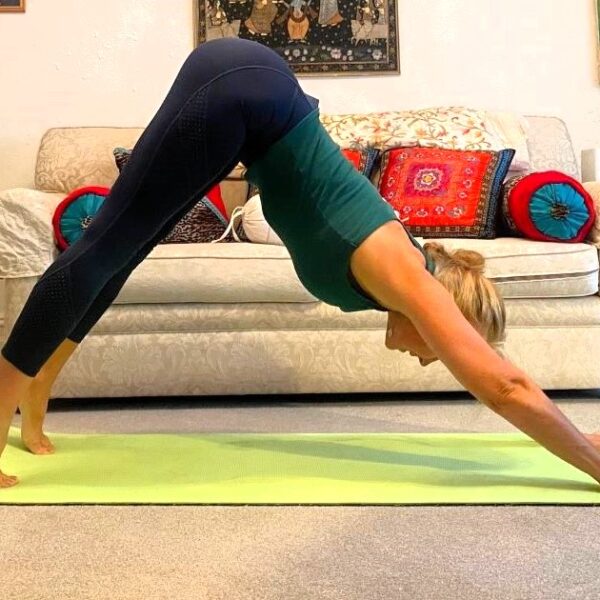
Downward Facing Dog – this depends on the individual. Some practitioners continue safely by keeping the gaze lifted and avoiding letting the head hang heavily. Others prefer to skip it entirely. Check with your eye specialist.
Many yoga postures are completely safe and supportive for people with glaucoma, especially when practiced with awareness. Some asana’s include:
Tadasana (Mountain Pose)
Virabhadrasana 1 & 11 (Warrior Poses)
Trikonasana (Triangle Pose)
Vrksasana (Tree Pose)
Lunge Poses
All practiced with the head upright and gaze forward or upward.
These poses cultivate balance, strength in the legs and opening in the hips while keeping the head safely above the heart.
Cross legged Seated Pose
Seated Twisting Postures
Seated Hip Opening Postures, such as Baddha Konasana and Konasana
Seated Forward Bending Postures – modify by keeping the gaze and head upwards, rather than resting the head below heart level.
Reclined Bound Angle Pose (Supta Baddha Konasana) – with the head resting on a folded blanket to keep it above heart level.
Supta Padanghustasana – with the head resting on a folded blanket to keep it above heart level.
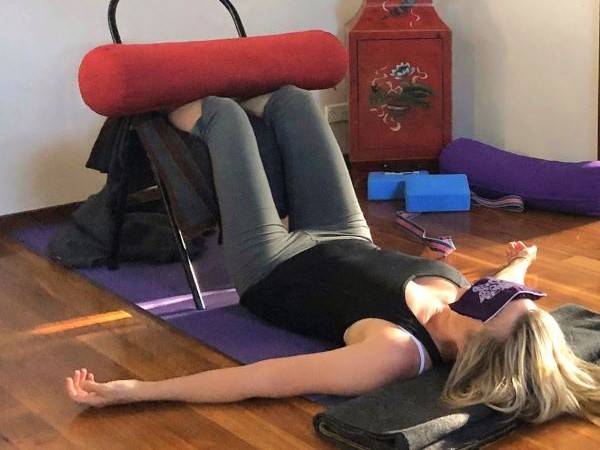
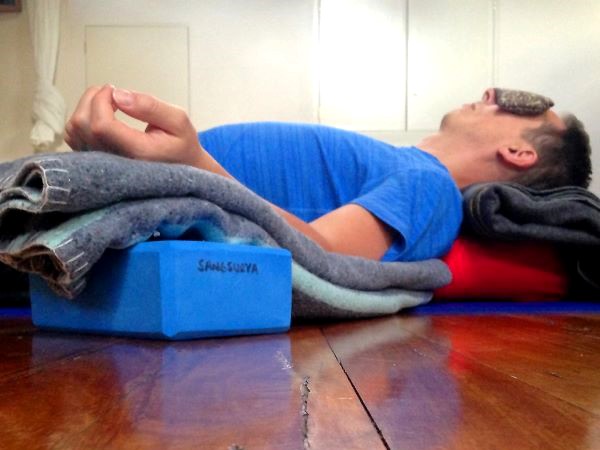
Chair Rest – lying down with the legs elevated on a chair – is a wonderful alternative to Legs Up The Wall. It offers similar restorative benefits without the head resting below the heart. This was one of the poses our NZ guest found most beneficial during the retreat. Restorative poses allow the nervous system to shift into healing mode and are deeply beneficial for overall wellbeing.
Soft belly breathing, alternate nostril breathing, guided body scans, and mindfulness meditation are all not only safe but particularly valuable – managing stress is directly beneficial for eye health. Pranayama and meditation can be incredibly powerful tools for overall wellbeing.
Keep the head and heart level – think about grounding and lifting rather than dropping down.
Use props freely – blocks, blankets, and bolsters allow you to modify poses without compromising alignment or safety.
Listen to your body – if you feel pressure, discomfort, or dizziness in any pose, come out of it immediately.
Work with an experienced teacher – someone who understands how to adapt yoga for medical conditions will help you feel confident rather than cautious.
Yoga is not about mastering extreme poses. It is about creating space in the body, settling the mind, and building a sustainable practice that serves you for life. With glaucoma, that intention does not change – just a few of the shapes do.
Always check with your healthcare provider if you are unsure about specific movements.
Feel free to get in touch with any questions. You might also like to explore our yoga retreats – small group, all levels welcome, with plenty of individual attention and adjustments throughout.
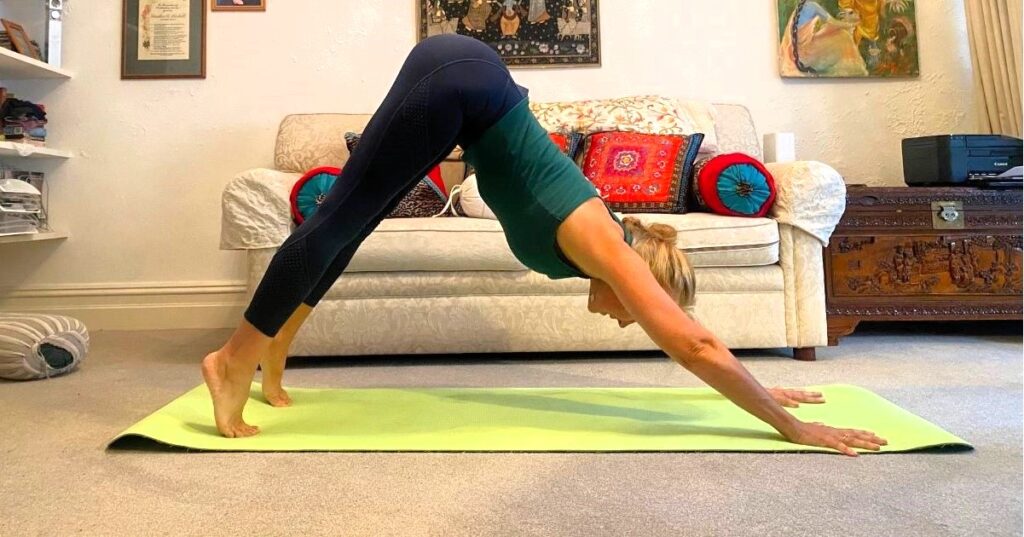
Bones respond to weight-bearing – and yoga offers this in a low-impact, nourishing way that also builds flexibility, alignment, and balance. As we age, particularly for women, bone density naturally decreases. The good news is we have powerful tools to support bone health. Yoga is one of them – and one I’ve been teaching for over three decades.
Each pose we hold is doing valuable work with weight-bearing, stabilising, and strengthening signals going directly to our bones. Here are just some of the yoga postures to return to again and again:
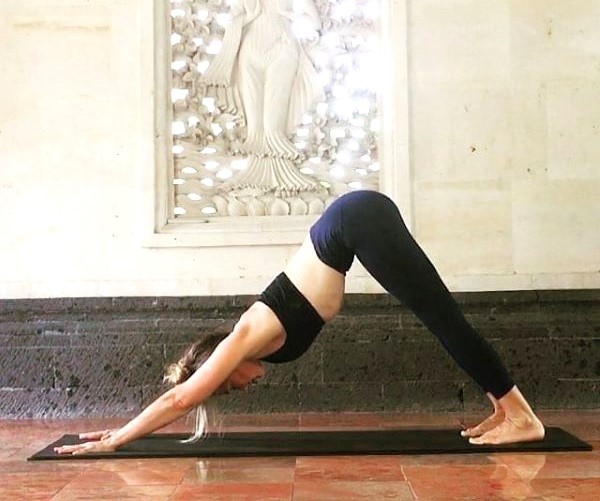
A full-body weight-bearing shape that engages the arms, shoulders, legs, and core simultaneously. One of the most efficient poses for bone support across multiple areas of the body at once.

Builds core stability and upper body strength, and improves bone density in the wrists, arms, and shoulders. Start with short holds and build up – it’s worth the effort.

It looks like simply standing – but done with full awareness, Mountain Pose strengthens the postural muscles that support the spine and pelvis. Tadasana is the foundation pose to return to between other standing postures.

Every time you engage your standing leg in Tree Pose, you’re sending signals to your bones to stay strong. A wonderful pose for strengthening the legs and hips and developing the balance and stability that helps prevent falls.

Warrior II strengthens the legs, ankles, and thighs while opening the hips and chest. Holding it with awareness creates the gentle pressure on bones that keeps them resilient.

Strengthens the legs and spine while stretching the hamstrings and side body. When practiced with correct alignment, Triangle activates the skeletal system in a way few other standing poses do.

Essentially a controlled squat – and squats are excellent for bone strength. Utkatasana strengthens the thighs, hips, and spine while building endurance and balance. Don’t underestimate it.

Gently strengthens the spine, back muscles, and shoulders. Backbends are particularly helpful for the vertebrae – an area vulnerable to age-related bone loss.

One of my favourites. Simple, effective, and deeply strengthening for the back, glutes, and hamstrings – all important for protecting the spine and stabilising the pelvis.

Activates the hips, glutes, and lower back – key areas for maintaining bone and muscle mass as we age. Bridge is also deeply grounding and has a restorative quality that makes it a satisfying way to finish a practice.

Rest matters. Savasana allows the nervous system to shift into recovery mode and helps the body absorb the benefits of everything that came before it. So good.
You don’t need long sessions — 10 to 20 minutes of mindful, weight-bearing movement three to five times a week adds up significantly over time. Pick a few of these poses and build them into your regular practice. Your bones will thank you for it.
If you’d like to explore these poses with guidance, my on-demand yoga classes include bone-strengthening and balance sequences suitable for all levels.
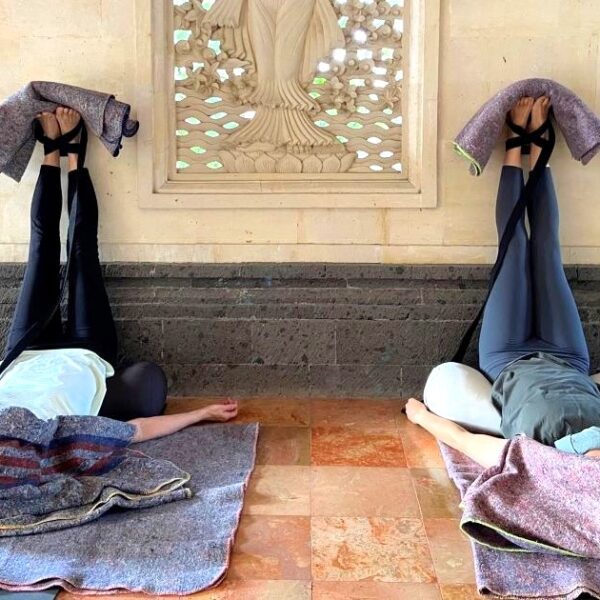
One of the most healing gifts we can offer ourselves is restorative yoga. This gentle, nourishing practice is more than just relaxing; it’s a profound return to balance. A restoration yoga practice – or even doing one restorative yoga posture for 10 minutes – can give us back our deeply rested self in a quite relaxed space. This is gold. In a world that moves fast, achieving deep rest can feel elusive—something we long for but rarely give ourselves permission to truly experience.
Restorative yoga is the art of doing less, to receive more. It’s a deeply restful and quiet practice that invites the body and nervous system to soften, reset, and heal. Unlike more dynamic forms of yoga, restoration yoga involves fewer poses, held for longer periods (usually 5–20 minutes), all while being fully supported with props like blankets, bolsters, blocks, chairs, and straps.
The intention is to create comfort and stillness so the body can release layers of tension and the mind can slow down. We’re not trying to stretch deeply or achieve anything physically. Instead, we’re creating an environment where the body feels it has permission to let go.

The Qualities of a Restoration Yoga Practice
Restoration yoga practice has a deep softness to it. It’s quiet, intentional, and spacious. Here are a few qualities that define this beautiful practice:
The Role of Props
Props are a deeply nourishing and supportive part of a restorative yoga practice. They do the work for us, so our body doesn’t have to. A bolster under the knees, a rolled blanket under the neck, a chair for your legs—all these setups allow the muscles to release, joints to soften, the nervous system to quieten and the breathing to slow down and relax.
If you’re practicing at home, you don’t need fancy equipment. Cushions, pillows, rolled-up towels, a couch or bed—these everyday items can easily become your sanctuary of support.

The Benefits of Restoration Yoga
When we allow the body to fully rest, something incredible happens. The nervous system shifts from “fight or flight” into “rest and digest.” This is where healing happens.
Some of the key benefits of a regular restorative yoga practice include:
Creating Your Own Rest Ritual
One of the most beautiful things about restoration yoga is how accessible it is. You don’t need to be flexible, strong, or experienced. All you need is a quiet space, a few props, and the willingness to slow down.
Start with just one pose—Legs Up the Wall (Viparita Karani) is a wonderful place to begin. Light a candle, turn off your devices, and give yourself permission to rest.

Restoration yoga is a reminder that rest is not a luxury—it’s essential. In giving ourselves the space to slow down, we restore more than just tired muscles. We restore our sense of self, our nervous system, and our connection to the present moment.
Whether you’re joining us on a Radiance Yoga Restore Wellness Retreat, practicing at home with one of my guided sessions, or simply taking five minutes to lie down with your legs elevated—may your rest be deep, healing, and truly restorative.
Ready to experience yourself deeply restored? View our upcoming retreat dates here. All our retreats include Restoration Yoga Classes, Yoga Nidra, guided relaxation and deep rest.
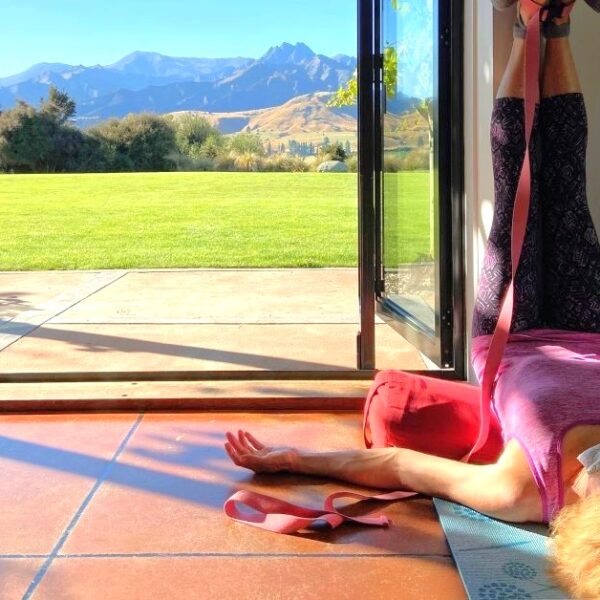
One of the things I love most about guiding retreats is watching the shift that happens. By day two or three, there’s this softening—you see it in people’s faces, in how they move, in the way they start to be rather than do. The slow mornings, the gentle practices, the nourishing meals, the space to rest and reflect—it all creates this beautiful rhythm that helps us come home to ourselves.
And it always reminds me: we don’t have to wait for the next retreat to feel that way.
Over the years, I’ve learned that ‘retreat’ isn’t just about a location—it’s a state of mind. It’s how we care for ourselves, how we pause, how we listen in. Even in the midst of a full life, we can bring little pockets of retreat into our day—a few intentional poses, a moment to breathe deeply, or just making space to sit quietly with a cup of tea.
That’s the heart of this practice. It’s always there, waiting for us to return.

Create the Atmosphere
To recreate that retreat feeling, set the space:
-Dim the lights or practice by candlelight.
-Pause for intention. Before you begin take a moment to place your hand and your heart and set an intention for this time and space of deep rest for you.
-Use yoga props for extra comfort, support and warmth. Wrap yourself in a soft shawl or blanket. Wear socks and warm clothes.
-Diffuse your favourite essential oils (lavender, sandalwood, eucalyptus are perfect).
-If the mind is busy play some soothing music – try nature sounds like soft running water.
-Give yourself permission to relax. Turn the focus inwards and listen to the air flowing in and out.
Below are five gentle yoga poses you can practice anytime you need a little calm, clarity, and care.
Supported Child’s Pose (Balasana):

Why: This pose instantly calms the nervous system, offering a sense of safety and surrender.
How: Kneel on your mat, bring big toes to touch and knees wide. Fold forward to rest over a cushion or bolster to support your whole front torse. Turn your head to one side. Stay here for 2–5 minutes with soft breath awareness.
Add: A folded blanket between your buttocks and heels as needed and cover your back with a blanket for added warmth and soothing weight.
Reclined Bound Angle Pose (Supta Baddha Konasana):

Why: Opens the heart and hips while inviting deep relaxation—like lying under the sun on retreat.
How: Lie on your back, bring the soles of the feet together and knees apart. Use cushions under your knees and a blanket under your spine or head. Close your eyes.
Stay: 5–10 minutes. Use an eye pillow or scarf to close out the light and relax the eye muscles for extra retreat vibes.
Legs Up the Wall (Viparita Karani)

Why: This gentle inversion soothes tired legs, reduces stress, and helps with sleep.
How: Sit sideways by a wall, lie down and swing your legs up. Adjust your hips to feel comfy. Rest arms by your sides.
Stay: 12 minutes or longer. Great before bed or after a long day.
Chair Rest:

Why: A gentle supported inversion that’s easy to do with powerful benefits.
How: lie on your back and rest the calves onto the seat of a chair. Place a bolster or cushion on the shins and something over the eyes.
Stay: for 10-20 minutes for deep healing rest.
Legs Resting on a Bolster:

Why: Gently raising the legs deeply restores the feet and legs for soothing rest.
How: Lie flat on your back, use bolster lengthways to rest the whole back of the legs and feet on. Wrap the legs in a blanket to keep them from sliding off the bolster – or strap the legs together. Rest the back of your hands on to blocks or cushions for an added soothing inversion for the hands and wrists. Cover your eyes to close out the light.
Stay: 10-15 minutes or longer…
Want to experience the power of restoration in a truly nourishing a guided retreat setting? Join us on Radiance Retreat—where every day includes a dose of deep rest, warm care, and space to simply be.
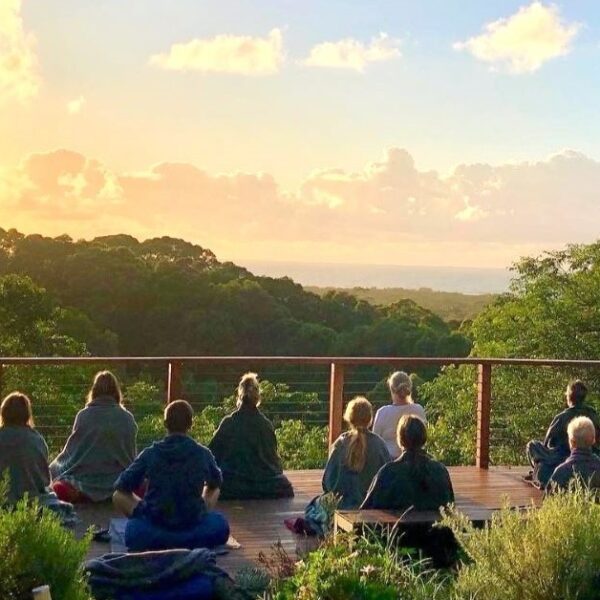
Place one hand on your heart space and one hand on your belly and close your eyes. Can you feel the stillness? Stillness is always there within us. We just need to create time and space to reconnect with the quiet inner space. A retreat offers us this space. A sacred pause, to breathe deeply, to let go and allow everything else to soften. It gifts us physical, mental and emotional space—to rest, reflect, and remember what truly matters. Through the natural stillness on retreat, mindful practices and time in nature, we not only relax but begin to realign our mindset and lifestyle.

Stillness doesn’t always come easily. At first, the quiet might feel unfamiliar. But slowly, with each silent morning, each deep breath, each gentle yoga practice, we start to settle. On retreat, we begin to rediscover ourselves in the pauses—on silent nature walks where the rhythm of our footsteps replaces the noise of the outside world, in the stillness that rises at the end of yoga practice, in the deep rest of savasana where the body lets go and the mind follows. We feel it sitting on mountaintops, surrounded by sky and birdsong, as the natural world reminds us how to simply be.

And the more stillness we bathe in, the more our mind finds its own quiet. The clutter begins to clear. Thoughts slow down. Space opens up inside us. This is where clarity lives. Being on retreat is more than just taking a break—it’s a return to ourselves. It’s the choice to step away from the noise and into our own rhythm. Whether we’re feeling burnt out, overwhelmed, or simply disconnected, a retreat gives us permission to stop striving and start listening. It allows us to examine what’s working in our lives—and what isn’t. From an unsustainable pace to a draining routine or outdated habits, the clarity born from stillness helps us see with honest eyes.
Saying yes to retreat is an act of self-respect. It is not about escaping life—it’s about creating space to reconnect. It’s about choosing to rest, reflect, and reset. Through mindful movement, quiet reflection, nourishing food, time in nature, and long stretches of silence, we begin to heal what’s been frayed or forgotten.
Self-care isn’t indulgent—it’s foundational. On retreat, we remember how to care for ourselves in a way that feels gentle but powerful. We return home with practical tools and soulful reminders: the strength that comes from setting boundaries, the peace that arises through mindfulness, and the resilience that’s built when we prioritise rest and reflection.

The impact of the retreat experience lasts far beyond the time away. With small, meaningful shifts in mindset and daily routine, we return home feeling more spacious, more connected, and more in tune with ourselves. That calm, clear version of ourselves that we experienced on retreat is not just our “retreat self”—it’s who we truly are underneath the noise. We return home from retreat with a renewed sense of clarity and simple, practical tools—like setting boundaries, embracing mindfulness, and prioritising self-care—that support real, lasting change.
To keep the retreat energy alive – and continue on with what we soaked in and gathered up – we can set up small daily rituals at home such as continuing on with a set few yoga postures each morning that really worked for us on the retreat and that we want to develop more; or, it may be a quiet daily walk without our phone, or an evening Legs Up The Wall practice that we do before bed to sleep better. A retreat gives us so many tools and gifts and when we return home, we can instill these into our daily lives and we can more easily set up healthy habits – and gentle boundaries where needed, Simple changes and healthy habits act as anchors to stay connected to the clarity and intention we discovered on retreat—long after we’ve returned home.
Would you like to experience the natural stillness and benefits of a retreat? Click here to view the Radiance Retreats Calendar for upcoming dates and locations.
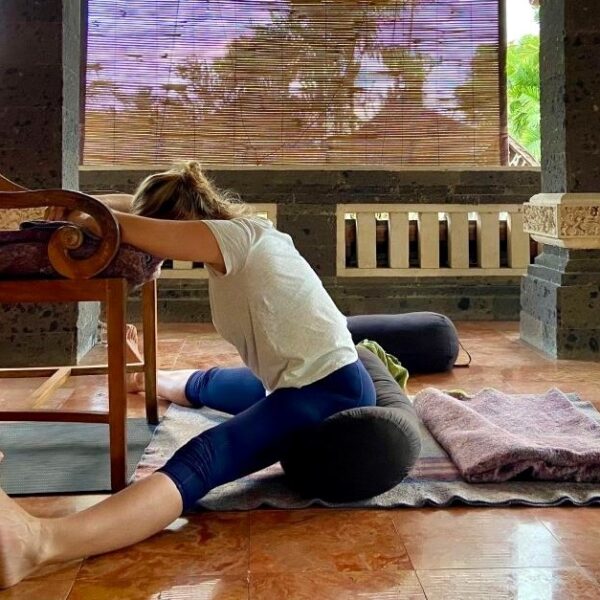
In my everyday yoga practice, I usually make good use of a few yoga props including a couple of blocks, a yoga strap, a bolster, two or three yoga blankets and an eye pillow. Sometimes I might also use a chair – to do a supported backbend or restorative shoulder stand with. Other times I might use more yoga straps to explore giving different parts of my body more support and containment. If my practice is a restoration one, then there might be more bolsters and blankets involved. Some days I’ll also use my wall ropes (see below for more on these). Yes, I love using yoga props.
Not every yoga asana practice requires the use of yoga props – especially if doing a more Vinyasa or flowing practice – and for many people yoga props are not used at all. And that’s okay. However, I love using them for the extra support, awareness, lightness and nourishment they give and as a yoga teacher I see how their proper use benefits so many people in deepening their practice.
Yoga Props & Where It All Began
Yoga prop usage was developed by B.K.S. Iyengar in the 1960s. Iyengar had a myriad of physical conditions and in his poor physical health was looking for better ways to be in the different yoga postures – and ways to make yoga accessible to people of all ages and physical conditions; to help students experience correct alignment in poses and a lightness of being. Iyengar believed that props were not crutches, but rather valuable tools that could help practitioners deepen their practice and work more intelligently. He stated: “The props are there to make it easy to work harder.”
Iyengar first began experimenting with household objects like bricks, belts, and blankets to help his students experience the full benefits of yoga, even if they were sick, injured, elderly, or stiff. Eventually, these household objects became the standard yoga props we know today: Blocks, originally bricks, straps – inspired by belts, chairs, blankets, bolsters, ropes – attached to walls, etc. Iyengar’s prop-based approach formed the foundation for Therapeutic yoga, Restorative yoga and all the alignment-based yoga styles used in studios around the world today. His method proved that yoga isn’t about “achieving” a pose—it’s about using tools and intelligence to work with your body, not against it. Whether you’re sinking deeper into relaxation, finding better alignment, or simply making a yoga posture more accessible, props are here to enhance, not “fix.”

If you’re not so familiar with the props read on for some insight into how to use them to bring more comfort, awareness, and freedom into your practice. At the bottom are some links to my favourite online Australian shops where they can be bought.

If I could only choose one prop forever, it might be the bolster. Bolsters help shift the nervous system into rest-and-digest mode—making them so effective for restoration, deep rest and anytime you need height, support and softness.
Here’s just a few ways I use my bolster:
Under the sacrum in Viparita Karani I Lying with the Legs Up a Wall Pose (pictured above).
Under the knees in Savasana for total lower back release.
For supported backbends (like reclining over it in Supta Baddha Konasana).
In seated forward bends to rest the head on to.
In supported child’s pose to rest the front of the torso onto.
In a wide range of restorative yoga postures to let the body fully surrender without strain

Yoga chairs open up a world of supported poses and deeper access, especially in Iyengar-inspired practices. Chairs allow you to explore advanced poses safely or simply rest into familiar ones with more depth and support.
Here’s a few ways I use my yoga chair:
For support backbends (pictured above).
For Deep Rest & Restoration in Chair Rest Practice (pictured at top of article).
In forward folds (sitting backward on the chair or folding over the seat).
For shoulder stand variations.
For seated twists, with added structure and alignment

Don’t underestimate the humble yoga block. These little bricks of joy offer lift, stability, and spaciousness wherever you need it. Whether foam or cork, blocks are like an extension of your body—they meet you exactly where you are.
How I use them:
Under hands in standing poses to “bring the floor up”
Under hips for supported bridge or seated poses
Between thighs to activate inner legs or support alignment
Behind the head in reclined postures for gentle neck support

Yoga isn’t about forcing yourself into a shape—it’s about meeting the shape with grace. That’s where straps come in. Straps encourage healthy lengthening instead of overreaching. They create the connection without compromising alignment.
How I use them:
In seated forward bends (looped around the feet to maintain a long spine).
Around the arms (just above the elbows) in Shoulder Stand and ‘Preparation Forearm Balance Pose’ (pictured above) to keep the elbows in line with the shoulders.
In shoulder stretches like Gomukhasana if the fingers don’t reach each other.
In reclined leg stretches (like Supta Padangusthasana) if you can’t reach the toes.
To support binding poses when hands don’t quite meet.

These are the quiet heroes of my prop cupboard. Simple, foldable, and endlessly versatile. I always keep a few blankets or shoulder pads nearby—they add such a sense of grounded-ness and comfort.
How I use them:
Under shoulders in shoulder stand or plow pose for cervical spine protection.
Under the pelvis to elevate hips in seated postures.
For knee support in kneeling postures.
To pad wrists, ankles, or any joints needing extra care.
In restorative yoga postures to give support and deeper rest as pictured above.

Yoga wall ropes are sturdy ropes affixed to a wall that can sustain a heavy load or a specially designed wall panel. They’re used to support the body in various asanas allowing for a more controlled stretch, decompression of the spine, and improved body awareness. Yoga wall ropes may look intimidating at first glance, but once you try them, you’ll understand the magic. They offer a unique combination of support and challenge that can unlock new experiences in your practice. They’re most commonly seen in Iyengar yoga studios but have grown in popularity across many styles due to their versatility.
Rope Sirsasana (Rope Headstand) – An inversion that allows spinal traction while minimizing pressure on the neck (pictured above).
Downward Dog with Ropes – Elongates the spine and supports the hips, allowing you to feel the pose differently than on the mat.
Supported Backbends – Deepen the chest opening while maintaining safety and control.
Rope Warrior or Lunge Variations – Adds resistance and helps train stability in the legs and hips.
Where To Buy Yoga Props
Here’s some websites to buy quality yoga props online in Australia:
www.iyogaprops.com.au
www.yoga-king.com
www.emp.com.au
www.stretchnow.com.au
Do you have a favourite prop? Or a question about how to use one in a particular pose? Contact me with any questions. I’d love to hear from you.
Ready to explore your yoga practice deeper? Check out all our upcoming personalised Radiance Yoga Restore Wellness Retreats.
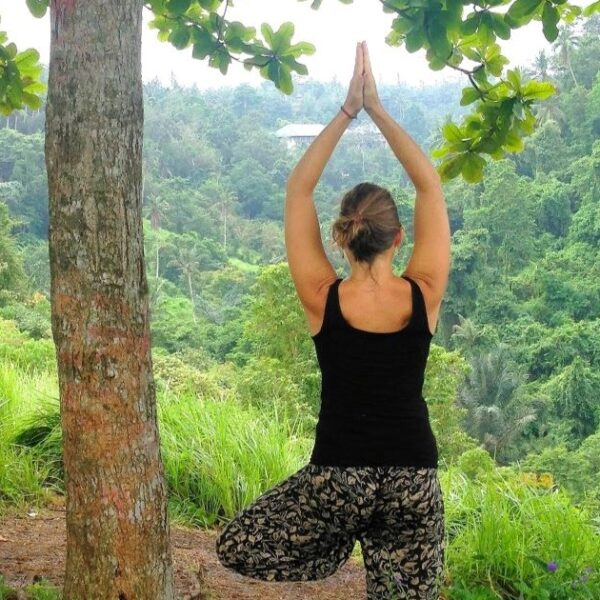
Being on holiday has always been a time for me to exhale— to slow down, breathe more deeply, and reconnect. Over the years, whether I’ve been by the sea, tucked away in a mountain cabin, or exploring a new city, I’ve found that the real magic happens when I bring a few retreat-style practices into my time away.
You don’t need to book into a formal yoga retreat to feel the deep nourishment that comes from mindful rest and movement. With a little intention, any holiday can become a mini retreat for the soul. I love bringing a journal, a couple of yoga props (even just a strap and a foldable blanket), and carving out some quiet time each morning for a few gentle stretches or a meditation before the day begins. It completely shifts the tone of the day—making it more grounded, spacious, and intentional.
Whether you’re heading to the coast, the countryside, or a city break, here’s how you can create your own yoga retreat vibe, wherever you are. A few small rituals can go a long way in turning your holiday into a time of true restoration.

Before you even pack your bag, take a quiet moment to reflect on how you want to feel during your trip and to create mindful travel experiences. Do you crave rest? Renewal? More connection with yourself? Setting a simple intention can subtly shape your whole experience and give your trip deeper meaning. Write your intention on a note and tuck it into your journal or travel bag. Let it guide your choices, from what you pack to how you spend your time.
You don’t need much—just the basics to help you stay consistent. A yoga mat, comfy clothes, and maybe a few favorite props (like a yoga strap and an eye pillow) can go a long way. A playlist or yoga app can also be great if you like guided sessions. If your space is tight, a folded towel works just fine for gentle stretching and seated meditation.
You don’t need to stick to a strict schedule. Instead, carve out mini moments throughout the day that help you reconnect to your breath and body. Here’s a retreat-inspired rhythm you could try:
Morning: Gentle yoga before breakfast; even 10 minutes does wonders for connection and relaxation.
Mid Morning: Enjoy a nature walk, long or short, walking in nature adds so many nutrients to our break.
Midday: Practice a short meditation in nature or use an App for a guided relaxation.
Evening: A restorative session to wind down. Even 10 minutes lying with the legs resting up a wall or on the seat of the chair can shift your entire energy.
One of the gifts of a retreat is eating mindfully. Adding fresh, whole foods to your meals will help you feel vibrant and balanced. Explore local produce, cook simple meals if you’re self-catering, or seek out cafes with wholesome options. And of course—balance is everything. Enjoy the wine, dessert, or local delicacy mindfully.
Try carving out screen-free pockets during your day—or even leave your phone behind for a few hours while you explore. Journal, nap, or just be. Designate a part of your trip as “silent time”—maybe a morning or an afternoon—to reconnect inward, free from notifications or outside noise.
Retreats often offer the chance to reflect and process. Journaling can help you tune into your inner world and get clarity on what you want more (or less) of in your life.
Prompt ideas:
What am I grateful for right now?
How am I feeling in my body today?
What do I want to take from this trip back into my daily life?
This isn’t about doing 90-minute class every day or eating 100% clean. It’s about intentionally creating space to nourish yourself—body, mind, and spirit. A walk in nature can be just as healing as a yoga class. A quiet cup of tea can be meditation. A few conscious breaths can bring you back to yourself.
You don’t need a retreat centre to find stillness or soul nourishment. With a little intention and presence, any trip can become a sacred reset. So next time you travel, try weaving in a bit of yoga and inner connection—and return not just refreshed, but truly renewed.
Ready to go deeper? If you’re craving the full soul nourishing retreat experience, check out our upcoming Radiance Retreats here. We’d love to share a retreat with you…
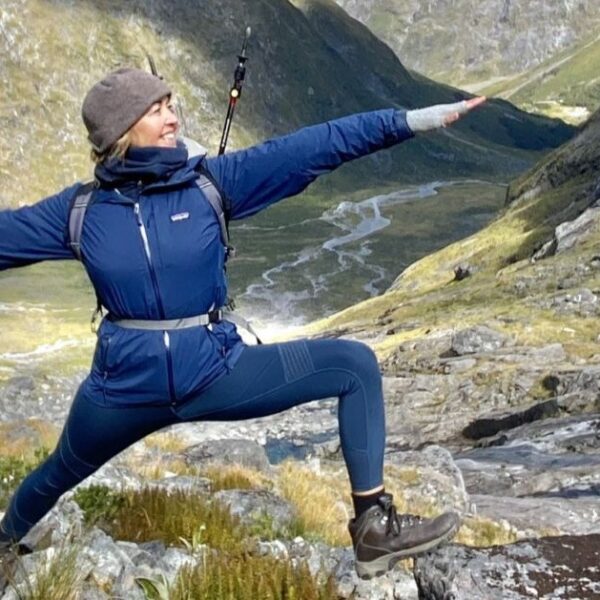
There are so many reasons why our practice can fall away when we’re away—early mornings, late nights, broken sleep, long travel days, full calendars, or simply being wrapped up in family, friends, or just soaking in a new place. And sometimes, if we’ve been pushing hard before the break, what we really need is to do absolutely nothing for a while… and sleep.
I used to feel a bit guilty when I didn’t stick to my usual routine. But now, I see holidays as a time to let go. No pressure. No expectations. There’s a time for everything. Just allowing myself to be is deeply nourishing. One of the best gifts we can give ourselves is a break from the idea that our yoga practice needs to be perfect or consistent.
Truth is, my practice on holidays rarely looks like it does at home. And that’s okay. It might just be ten minutes of stretching on the floor of a hotel room, or a quiet walk on the beach with conscious breath. It might be doing nothing at all and simply resting.
Yoga reminds us not to cling—not to attach to how things “should” look. That lesson feels especially alive when we’re away from our usual rhythms. So if you’re on holiday and your practice looks different—or doesn’t happen at all—that’s perfectly okay. You’re still practicing. You’re still showing up.
“Your yoga practice doesn’t expect you to show up happy. It asks that you be present. It doesn’t mind if you are put together, or if you are a mess. You can arrive with a jumbled mind and a heavy heart. Your practice couldn’t care less if you can touch your toes or meditate for hours. It asks simply, that you show up”. Unknown author.

Yoga is as much about adaptability and presence as it is about doing yoga postures. When a full yoga practice – or getting to a class – is unrealistic there’s gentle ways we can incorporate some yoga into our days to give us a sense of inner connection and to help sustain us with some inner strength and awareness.
Here’s some simple ways to keep moving (and breathing well) when on holidays:
Bed Yoga for Connection & Stillness: Before we get out of bed, check our phone or start making breakfast we can start our day with connection and stillness just being where we are in bed or sitting quietly. Place the hands on the belly, close your eyes, and feel the breath flowing in and out. Listen to the sound of the breath. Watch the air flow. Just a few minutes sets the tone for a relaxed start to the day.
Kitchen Yoga: Waiting for the kettle to boil? Try a half Downward Facing Dog Pose variation with the hands on the kitchen bench to lengthen the spine and stretch open the back of the legs. From there roll over the toes and come into a supported Upwards Facing Dog Pose on the bench. Keep moving from Downward Facing Dog Pose to Upwards Facing Dog Pose with the ’in’ and ‘out’ breath to free up the spine and whole body for a simple kitchen yoga practice.
Short Online Yoga Classes or Apps: A 10- or 15-minute video can be incredibly effective. Don’t underestimate what a short, well-guided practice can do for your body and mind. Here’s a link to a 25 minute Deep Release Yoga practice on my Radiance YouTube channel. You can also sign-up to my online yoga video classes offering for a range of inspirational 10, 15, 20 and 30-minute yoga practices from gentle flow to guided restoration and handstand practices.
Out & About Yoga: I love this type of practice that cultivates creativity and connection with the outdoors and nature. It might be doing some standing yoga postures during a hike to stretch and strengthen or using a park bench to lengthen the spine, doing some seated twists on the train or practicing under the shade of a beautiful tree. Our yoga mat is wherever we are.

Yoga during the holidays isn’t about discipline — it’s about care. Let your practice serve you, not the other way around. And remember: even a moment of mindful breath or a gentle stretch is enough.
So keep it simple. Keep it kind. Keep it a practice that serves you in this moment. Some days might be 10 minutes of stretching. Others might be a quiet slow walking meditation or a lying down relaxation after dinner. All of it counts. Non-attachment also means not punishing ourselves. Know that when the time is right, we will return to our regular practice – and hopefully with a fresh perspective, renewed passion and kindness.

For a comprehensive yoga retreat holiday, visit our website and discover more about our Radiance Wellness Retreats in Bali, Byron Bay, New Zealand and beyond.